What Is Carryover Cooking (And Why Your Meat Keeps Rising)
Pull a steak off the grill right at 130°F expecting medium-rare, and a few minutes later it reads 140°F, past the mark, and firmer than expected. This is carryover heat, and it catches even experienced cooks off guard because it feels counterintuitive that meat keeps cooking after it’s removed from the heat source entirely.
Understanding carryover heat is one of the simplest ways to get consistently better results without changing anything about the cooking method itself. It just means pulling meat a few degrees before the actual target, and trusting that it will finish rising on its own while resting. Once this becomes second nature, the guesswork around “did I overcook this” mostly disappears.
The sections ahead cover why this happens, how many degrees to expect for different cuts, and how to build carryover into pull temperatures so the final result lands exactly where it should.
What Causes Carryover Heat
Carryover heat happens because temperature doesn’t stop moving the moment meat leaves the heat source. During cooking, the outside of the meat is hotter than the center, and heat continues traveling from the hotter outer layers toward the cooler center even after the meat is removed. This continued heat transfer is what causes the internal temperature to keep climbing for several minutes after cooking ends.
Why size matters so much
The amount of carryover depends heavily on the size of the cut. A thin steak or chop has a short distance for heat to travel between the surface and the center, so there’s less stored heat left to transfer once it’s off the grill. A large roast, on the other hand, has a much bigger temperature gradient between its exterior and interior, meaning there’s significantly more heat still working its way inward after cooking stops.
This is why a thin pork chop might only rise 3-5°F after resting, while a whole turkey or a large prime rib can climb 10°F or more. The bigger the cut, the more carryover needs to be factored into the pull temperature.
How Many Degrees to Expect
The exact rise in temperature depends on a few factors, but there are some general patterns worth knowing.
Steaks and chops
Thin cuts like steaks, chops, and chicken breasts typically rise 3 to 5°F after being pulled. Because these cuts are thinner, there’s less residual heat stored in the outer layers, so the climb is smaller and happens quickly, usually within 5 to 10 minutes.
Large roasts
Bigger cuts like prime rib, whole turkey, pork shoulder, or brisket can rise anywhere from 5 to 15°F, sometimes more depending on size. Because there’s a much larger volume of meat storing residual heat, the temperature keeps climbing for longer, sometimes 20 minutes or more for the largest roasts.
What affects the amount of carryover
- Cooking method: high, direct heat methods tend to carry over less than slow, indirect methods
- Size and thickness: bigger and thicker cuts carry over more
- Starting temperature when pulled: pulling at a higher temperature generally means a slightly bigger rise
- Resting environment: resting under foil or in a warm spot can extend the carryover period slightly compared to resting uncovered
These aren’t exact numbers for every situation, but they’re a solid starting point for adjusting pull temperatures, which the next few sections build on.
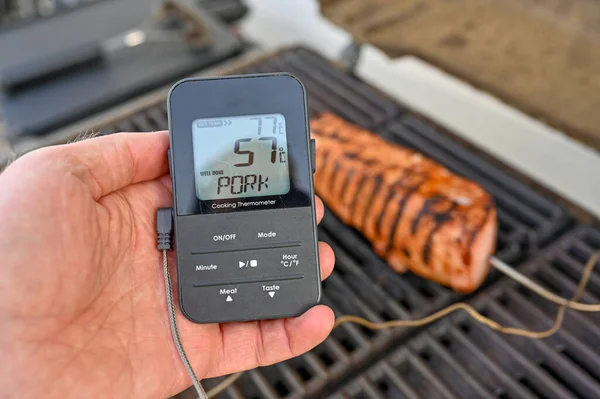
Carryover by Cooking Method
The way meat is cooked affects how much carryover happens, since different methods create different heat gradients between the surface and the center.
Grilling and searing
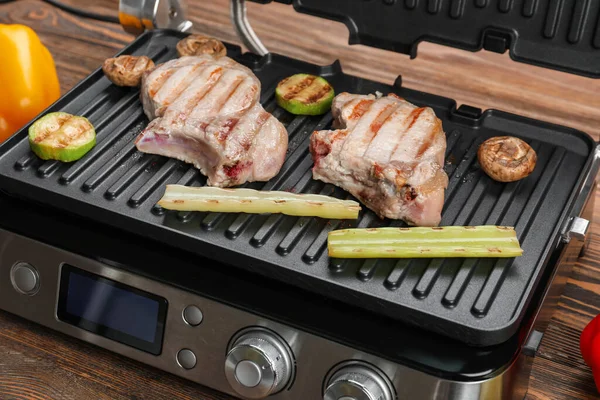
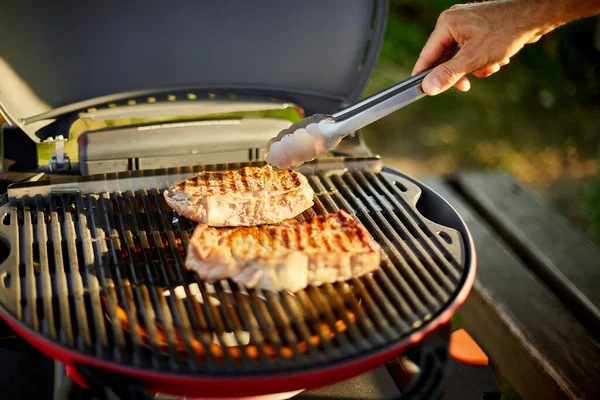
High, direct heat methods like grilling or pan-searing tend to produce less carryover relative to the size of the cut. This is because the intense heat is concentrated at the surface for a shorter cooking time, meaning less heat has fully penetrated toward the center by the time the meat comes off. A grilled steak might only rise 3-5°F, even though it was cooked over very high heat.
Oven roasting
Slower oven roasting, especially at lower temperatures, tends to produce more carryover than grilling or searing. Because the heat has more time to build up gradually throughout the entire cut, there’s more residual heat stored by the time the roast comes out of the oven, leading to a bigger continued rise during resting.
Smoking
Smoking, especially low-and-slow methods for brisket or pork shoulder, often falls somewhere in between, though large cuts smoked for many hours can carry over significantly simply due to their size. The long cook time means heat has fully saturated the meat, so there’s plenty of residual heat left to keep the temperature climbing after it comes off the smoker.
Why this matters for pull temperatures
A steak seared over high heat and a pork shoulder smoked for 12 hours need very different pull-temperature adjustments, even if both are being pulled to reach the same final target. The next section breaks down specific pull temperatures by food type to make this easier to apply.
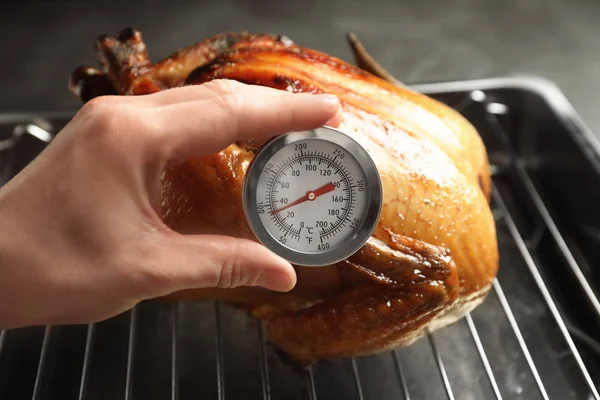
Pull Temperatures for Common Foods
Here’s a practical reference for when to pull common cuts, accounting for expected carryover.
Steaks and chops
- Rare (final 125°F): pull at 120-122°F
- Medium-rare (final 135°F): pull at 130-132°F
- Medium (final 145°F): pull at 140-142°F
- Pork chops (final 145°F): pull at 140-142°F
Whole chicken and turkey
- Chicken breast (final 165°F): pull at 160-162°F
- Whole chicken (final 165°F in thigh): pull at 160°F
- Whole turkey (final 165°F in thigh): pull at 155-160°F, since larger birds carry over more
Large roasts
- Prime rib, medium-rare (final 135°F): pull at 125-128°F
- Pork shoulder (final 195-205°F for pulling): pull at 190-195°F
- Brisket (final 195-203°F): pull at 190-195°F
Quick reference table
| Cut | Final Target | Pull Temperature |
|---|---|---|
| Steak (medium-rare) | 135°F | 130-132°F |
| Chicken breast | 165°F | 160-162°F |
| Whole turkey | 165°F | 155-160°F |
| Prime rib (medium-rare) | 135°F | 125-128°F |
| Pork shoulder | 195-205°F | 190-195°F |
| Brisket | 195-203°F | 190-195°F |
These numbers are a helpful starting point, but resting conditions also play a role in how closely the final temperature matches expectations, which the next section covers.
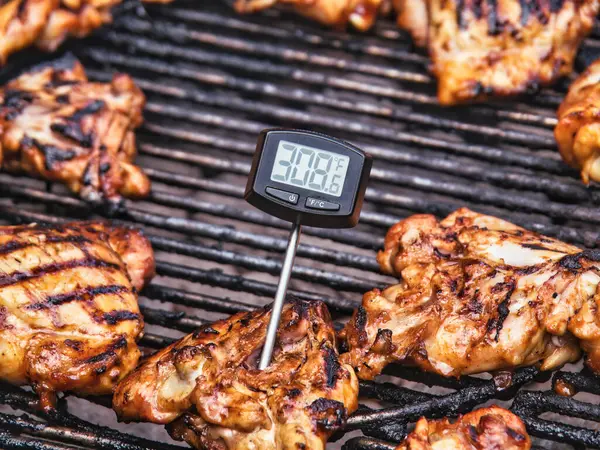
The Role of Resting Time
Resting does more than just allow carryover heat to finish rising, it also plays a major role in how juicy the final result turns out.
Why resting affects juiciness
During cooking, the muscle fibers in meat tighten up and push moisture toward the center. If meat is cut into immediately after cooking, much of that moisture runs out onto the cutting board instead of staying in the meat. Resting gives the fibers time to relax and reabsorb some of that moisture, which is why a rested steak or roast tends to be noticeably juicier than one sliced right away.
How long to rest based on size
- Steaks and chops: 5 to 10 minutes is usually enough
- Whole chicken: 10 to 15 minutes
- Whole turkey: 20 to 30 minutes
- Large roasts like prime rib or brisket: 20 to 45 minutes, sometimes longer for very large cuts
Resting method matters too
Tenting meat loosely with foil helps retain some heat during resting without trapping so much steam that the crust gets soggy. For very large cuts like brisket, wrapping in foil or butcher paper and resting in an insulated cooler can hold temperature for an hour or more, which is especially useful when timing a meal around other dishes.
Skipping the rest period entirely, even when the target temperature has technically been reached, is one of the most common ways good cooking gets undone at the last step, which leads into the next section on avoiding that mistake.
Common Mistakes
A few small missteps can undo an otherwise well-cooked piece of meat, even when the temperature was tracked carefully.
Pulling meat exactly at the target temperature
This is the most common mistake. Pulling a steak at 135°F expecting medium-rare, without accounting for carryover, often results in the final temperature landing closer to medium. The fix is simple: pull a few degrees below the actual target and let the rise happen during resting.
Not accounting for carryover when using a wireless thermometer’s target alerts
Many wireless thermometers let users set a target temperature and send an alert once it’s reached. If that target is set to the final desired doneness rather than the adjusted pull temperature, the meat will overshoot past what was intended by the time it finishes resting. Setting the alert a few degrees below the real target builds carryover directly into the alert.
Skipping the rest period to save time
Cutting into meat immediately after pulling it, especially with larger roasts, means missing out on both the carryover rise and the moisture redistribution that resting provides. Even five extra minutes makes a noticeable difference for smaller cuts, and skipping it entirely on a large roast can mean losing much of the juiciness that careful cooking built up.
Assuming every cut carries over the same amount
Treating a thin chicken breast the same as a whole turkey when it comes to pull temperature leads to inconsistent results. Bigger cuts need a larger buffer between pull temperature and final target, as covered in the earlier sections.
The next section looks at how a wireless thermometer can help take some of the guesswork out of managing all of this.
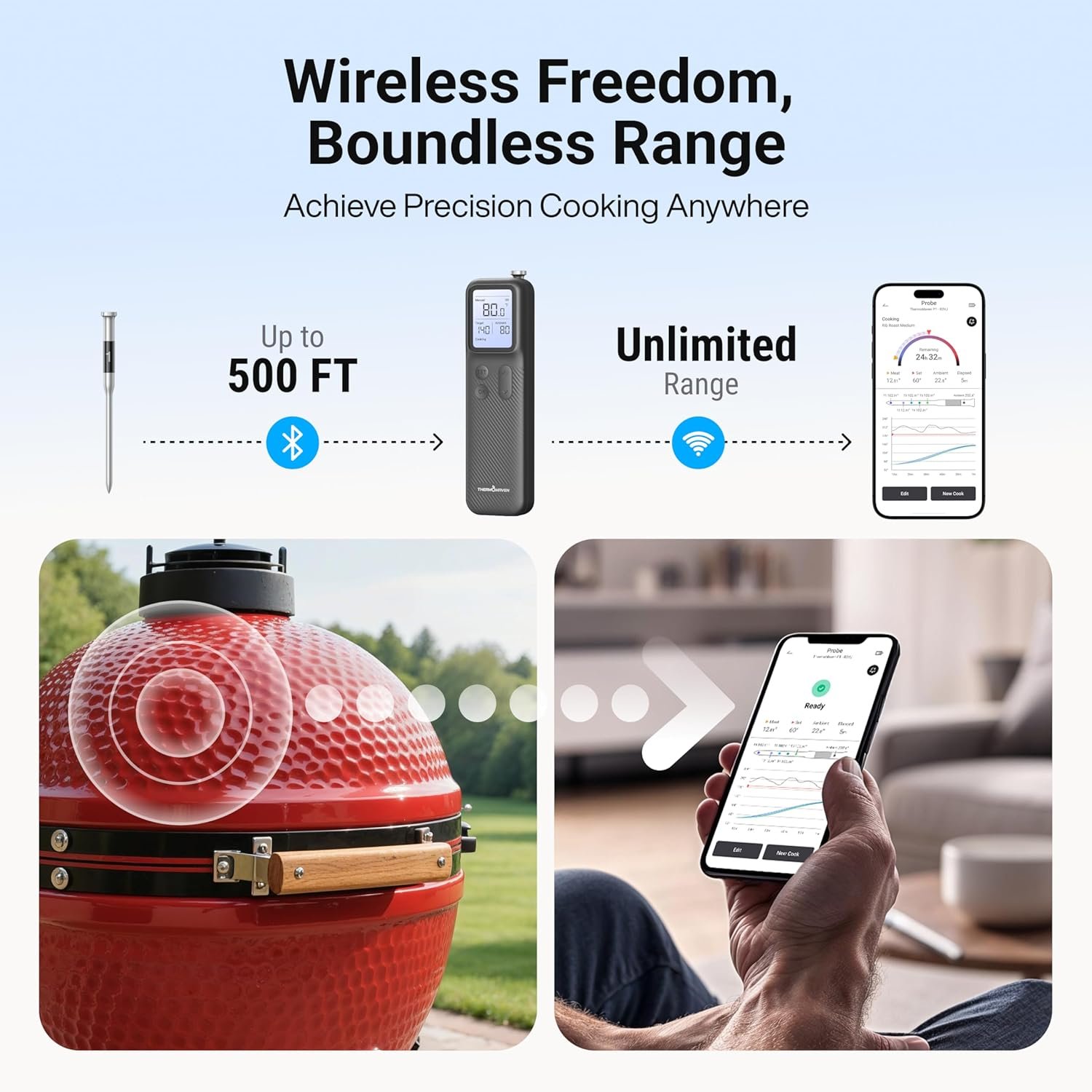
How a Wireless Thermometer Helps
Tracking carryover heat manually means doing some mental math every time, but a wireless thermometer can take most of that guesswork away.
Setting pull-temperature alerts that already account for carryover
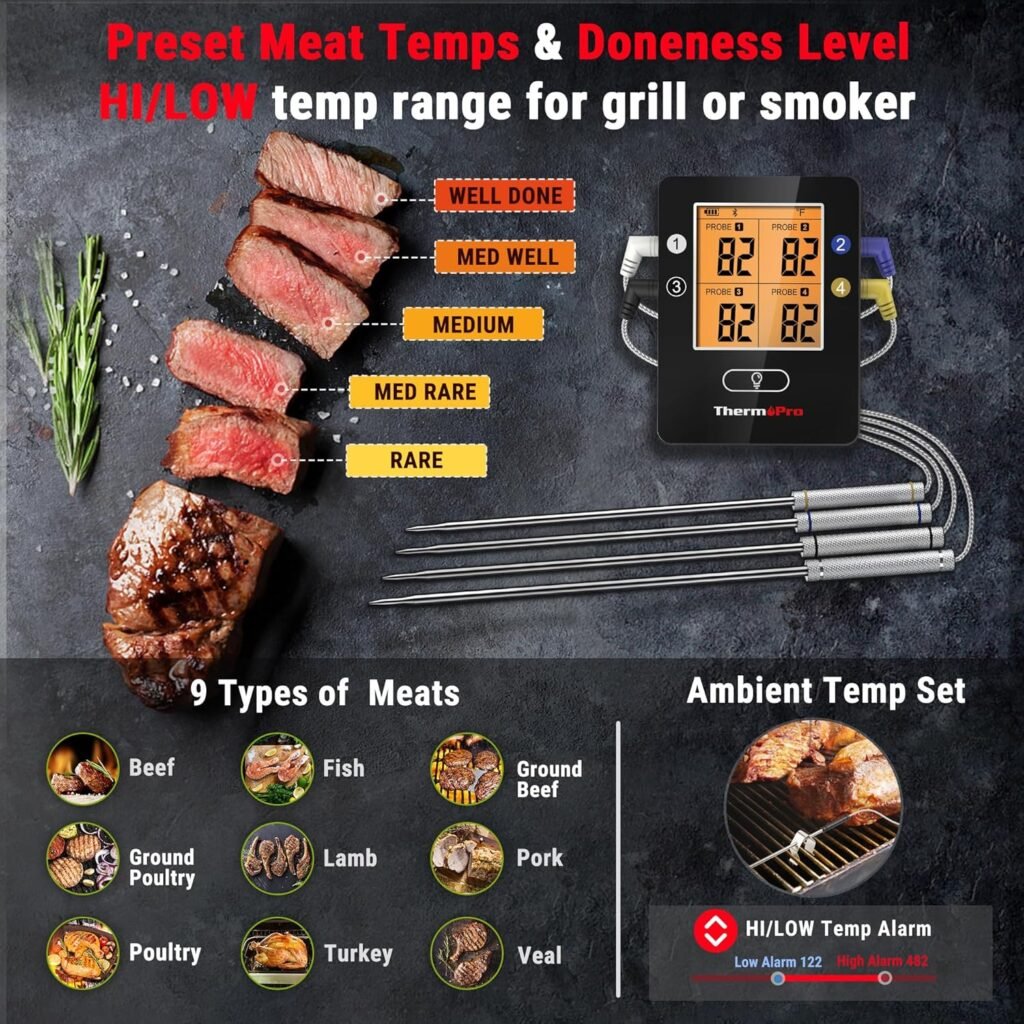
Instead of setting a target alert to the final desired doneness, setting it to the adjusted pull temperature means the alert fires at exactly the right moment, no extra math required during the actual cook. Models with app-based target temperature presets, like the TempPro TP970 or TP25, make it easy to dial in a custom pull temperature rather than relying only on generic doneness presets.
Watching temperature during the rest, not just during cooking
One of the most useful habits is leaving the probe in the meat during resting, rather than pulling it out the moment the meat comes off the heat. This makes it possible to actually watch the carryover happen in real time, confirming when the temperature has peaked and started to level off, rather than guessing when resting is complete.
Multi-probe monitoring for larger cooks
For bigger cooks involving multiple cuts, like a holiday turkey alongside a ham, or ribs cooked alongside a brisket, a multi-probe thermometer like the TP25 makes it possible to track carryover across several pieces of meat at once, each with its own adjusted pull temperature and alert.
Why this matters most for beginners
Anyone newer to cooking by temperature often either doesn’t know about carryover heat at all, or knows about it but struggles to apply the right adjustment consistently. A thermometer that allows for a custom target temperature removes that friction entirely, since the adjustment only needs to be made once when setting up the alert.
The next section answers a few common questions that come up around carryover heat.
Key Takeaways: Mastering Carryover for Perfect Doneness
Carryover heat is one of the simplest adjustments to build into any cooking routine, and it makes a real difference in hitting the intended doneness consistently. The key numbers to remember: thin cuts like steaks and chops typically rise 3 to 5°F, while large roasts like turkey, brisket, and pork shoulder can climb 10°F or more.
Pulling meat a few degrees before the final target, then trusting the rest period to finish the job, takes the anxiety out of cooking by temperature. And with a wireless thermometer that allows for custom target alerts, like the TempPro TP970 for single cuts or the TP25 for monitoring multiple pieces at once, building carryover into the process becomes something that happens automatically rather than something to calculate every time.