Bluetooth vs WiFi vs RF Meat Thermometers
Why wireless thermometers have taken over from wired probes?
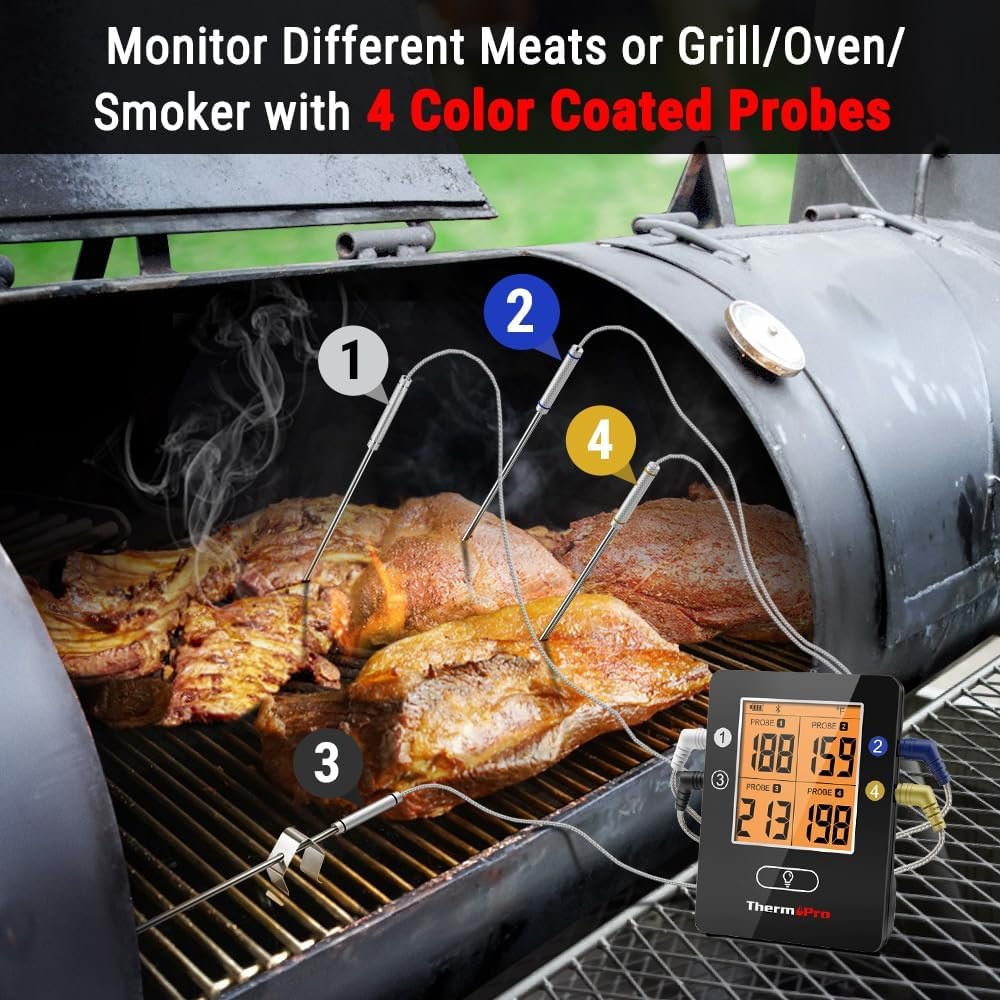
A wireless meat thermometer has become the standard tool for anyone serious about grilling, smoking, or roasting, replacing the old habit of standing over the lid to check doneness. A good wireless meat thermometer tracks internal temperature in real time and reports it whether from across the yard or from inside the house.
But not all wireless thermometers work the same way. The connection type behind a wireless meat thermometer — whether Bluetooth, WiFi, or RF — determines how far it reaches, how reliable the signal stays through metal smoker walls or thick grill lids, and how much setup is involved before the first cook.
Picking the wrong connection type for a specific setup is a common frustration. Someone using a wireless meat thermometer to monitor a brisket from a detached garage needs something different from someone who just wants to check a steak from the couch. Understanding how each connection type actually works makes it much easier to choose a thermometer that matches how and where the cooking happens, rather than ending up with dropped signals or a device that can’t reach the kitchen. Getting this right the first time means less back-and-forth error, no matter which wireless meat thermometer ends up on the grill.
This breaks down how Bluetooth, WiFi, and RF each function, before getting into range, setup, and which wireless meat thermometer connection fits which situation best.
How Each Connection Type Works
Before comparing range and reliability, it helps to understand what’s actually happening behind each wireless meat thermometer connection type.
Bluetooth
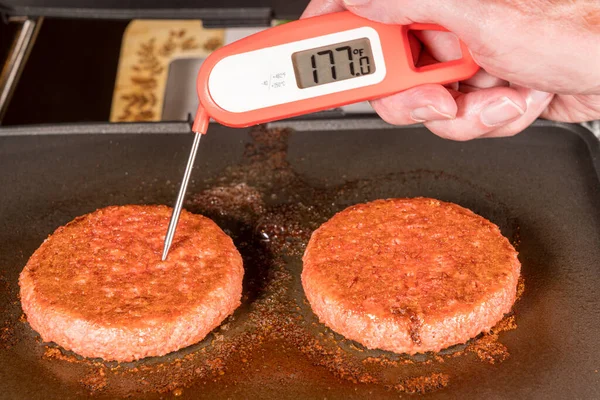
A Bluetooth-based wireless meat thermometer pairs directly with a smartphone, the same way wireless earbuds or a smartwatch connects. No home network is involved, the probe talks straight to the phone over a short-range radio signal. This makes setup fast, usually just a few taps in an app, and some models don’t even require creating an account. The trade-off is that Bluetooth is a point-to-point connection, so range and signal strength depend heavily on what’s standing between the probe and the phone.
WiFi
A WiFi-based wireless meat thermometer connects through the home’s wireless network rather than pairing directly with a phone. Because the signal travels through the router rather than directly to the device, WiFi thermometers can be monitored from anywhere with an internet connection, even from a different city. This makes them the most flexible option for genuinely remote monitoring, though it also means the initial setup takes a bit longer, since the thermometer needs to be connected to a 2.4GHz network before use.
RF (Radio Frequency)
An RF wireless meat thermometer works differently from both Bluetooth and WiFi. Instead of pairing with a phone or joining a home network, RF models use a dedicated receiver unit, usually a small base station with its own display. The probe and receiver talk directly to each other over a radio frequency built to push through walls and metal more effectively than Bluetooth. There’s no app to install and no account to set up, the receiver simply displays the temperature as soon as the probe is in place.
Each of these approaches has a different sweet spot depending on distance, what’s in the way, and how much setup someone wants to deal with – and picking the right wireless neat thermometer comes down to matching that setup, which is exactly what the next section digs into.
Range Comparison
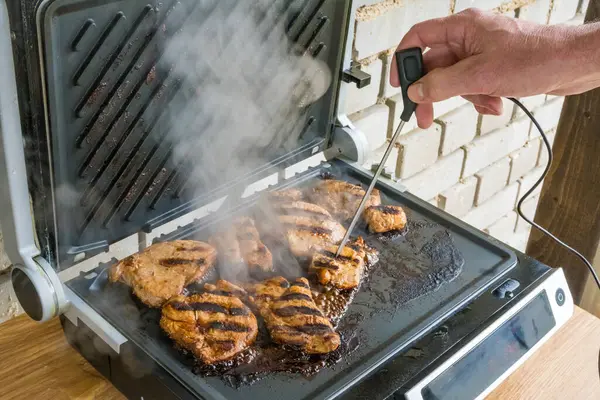
Range is often the deciding factor when choosing a wireless meat thermometer, especially for anyone monitoring a cook from somewhere other than right next to the grill.
Bluetooth range
Bluetooth thermometers typically offer 100 to 600 feet of range in open air, which sounds like plenty on paper. In practice, though, that number drops fast once walls, metal, or distance get involved. Real-world range through metal smoker walls or a thick grill lid can fall significantly, often down to just 30 to 50 feet. This makes Bluetooth a solid choice for smaller backyards or patios, but less reliable for anyone who wants to step inside the house during a long cook.
WiFi range
WiFi thermometers connect through the home network, giving unlimited range as long as there’s an internet connection. This means checking a smoker from another room, another floor, or even another city is possible, since the connection isn’t limited by physical distance between the probe and the phone. The catch is that WiFi requires a functioning 2.4GHz network nearby, so range is really only as good as the WiFi signal reaching the grill or smoker in the first place.
RF range
RF thermometers use a dedicated receiver rather than a phone app and often achieve the most reliable signal through metal and walls, with some models reaching 500 to 2,000 feet. This makes RF the strongest option for larger properties, detached garages, or anyone who wants to keep an eye on a smoker from well inside the house without relying on a home network at all.
Quick comparison
| Connection | Open-Air Range | Through Walls/Metal | Needs Network? |
|---|---|---|---|
| Bluetooth | 100–600 ft | Drops to ~30–50 ft | No |
| WiFi | Unlimited | Depends on WiFi signal | Yes |
| RF | Up to 2,000 ft | Holds up well | No |
Range is only part of the picture, though. Setup and everyday convenience matter just as much, which is what the next section covers.
Setup and Ease of Use
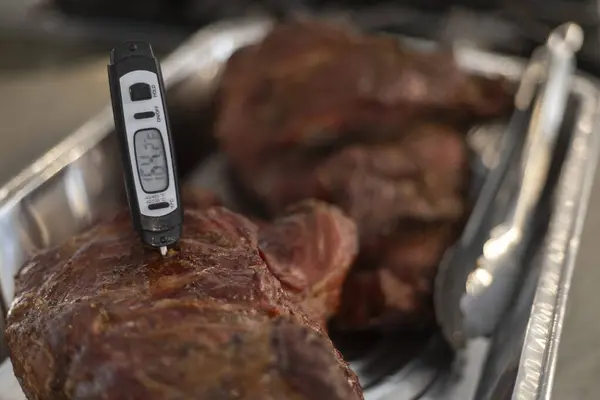
Range matters, but so does how much effort goes into getting a thermometer up and running before the first cook.
Bluetooth setup
Bluetooth thermometers are usually the fastest to get going. Pairing happens directly between the probe and the phone, often through a simple app download and a quick tap to connect, no home network configuration required. Some models don’t even require creating an account, which makes them a good fit for anyone who wants to start monitoring a cook within minutes of opening the box.
WiFi setup
WiFi thermometers take a bit more effort upfront. Since the thermometer needs to join the home’s wireless network before it can be monitored remotely, setup usually involves selecting a network, entering a password, and waiting for the device to connect, similar to setting up a smart home gadget. This also means a functioning 2.4GHz network needs to be available nearby, which can be a hurdle in detached garages or outdoor kitchens without strong WiFi coverage.
RF setup
RF thermometers tend to be the simplest of the three once the connection type is understood. There’s no app to download and no account to create, making setup instant. The probe pairs with its dedicated receiver right out of the box, and the receiver displays the temperature immediately, no smartphone required at all. This appeals to anyone who wants a straightforward, plug-and-play experience without dealing with apps or networks.
When range and reliability matter most, the connection type built into your wireless meat thermometer becomes the deciding factor.
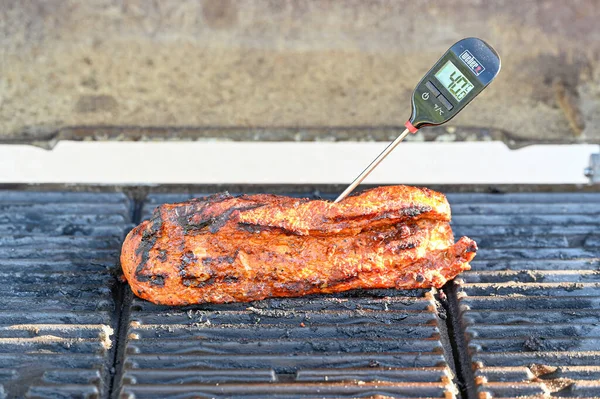
Which setup style fits best
- Bluetooth: best for anyone who wants the fastest possible setup and doesn’t mind staying within a shorter range
- WiFi: best for anyone willing to spend a few extra minutes on setup in exchange for unlimited remote range
- RF: best for anyone who wants zero apps, zero accounts, and instant use
Setup is only half the story, though. How each connection type holds up during an actual long cook, with real walls, real distance, and real interference, is covered next.

Reliability in Real Conditions
Specs on a box only tell part of the story. What actually matters is how a thermometer performs during a real cook, with real walls, real distance, and real interruptions in between.
Bluetooth in practice
Bluetooth tends to perform well for cooks that stay close to the house, like monitoring a grill on the patio while moving in and out of the kitchen. Where it struggles is with longer smokes that involve stepping further away or moving to a different part of the house. Metal smoker walls and thick grill lids can cut real-world range down to roughly 30 to 50 feet, which means a signal that seemed strong at setup can drop out mid-cook without warning.
WiFi in practice
WiFi holds up well for genuinely remote monitoring, since the connection travels through the router rather than needing a direct line to the probe. This makes it dependable for checking a smoker from another floor or even from outside the house entirely. The main point of failure isn’t distance, it’s WiFi coverage itself. If the signal reaching the grill or smoker is already weak, the thermometer inherits that same weakness.
RF in practice
RF connections tend to be the most consistent option for long, unattended cooks. The RF signal is designed to penetrate metal and walls more reliably than Bluetooth, which matters most during multi-hour smokes where the cook might be checked on from inside the house, a garage, or even a different building on the same property. One product reviewer summed up this reliability directly, noting that the battery life and heat resistance performed well, holding up through the demands of a full brisket cook without issues.
Best for long, unattended cooks
For anything longer than a couple of hours, like brisket, pork shoulder, or an overnight smoke, RF tends to be the most forgiving option when it comes to holding a stable connection without needing to stay close to the grill.

Best Use Case for Each Type
With range, setup, and reliability covered, the real question is which connection type fits a specific cooking setup and lifestyle.
Bluetooth is best for:
- Backyard grilling on a patio or deck close to the house
- Anyone who wants the fastest setup with no account creation
- Shorter cooks where staying within 50–100 feet of the grill isn’t an issue
- First-time wireless thermometer users who want something simple to start with
WiFi is best for:
- Anyone who wants to check a smoker from work, a different city, or anywhere with internet access
- Multi-story homes where the grill or smoker is far from where people spend time indoors
- Cooks who already have strong WiFi coverage extending to the patio or backyard
- Those comfortable with a slightly longer initial setup in exchange for unlimited range
RF is best for:
- Large properties, detached garages, or anyone who regularly monitors a smoker from well inside the house BBQ Report
- Long, unattended cooks like brisket or overnight smokes where a dropped connection isn’t an option
- Anyone who wants a plug-and-play experience with no app or account required
- Setups without reliable WiFi coverage reaching the grill or smoker
A quick way to decide
Someone grilling steaks on a small patio a few times a month will likely never notice Bluetooth’s range limits. Someone smoking a brisket overnight from a detached garage, on the other hand, will feel the difference immediately with RF’s stronger wall penetration. And anyone who travels or wants to check a cook from outside the house entirely will get the most consistent experience from WiFi.
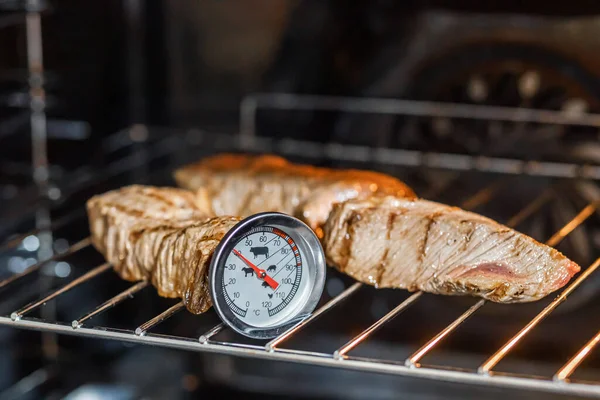
Recommended Models by Connection Type
Here’s a quick breakdown of thermometers to look at for each connection type.
Best Bluetooth Option
The TempPro TP970 Truly Wireless Meat Thermometer is a strong pick for anyone starting out with Bluetooth. It’s fully wireless with a single probe, a 600ft Bluetooth range, and a straightforward app that requires no account creation or network configuration to start monitoring. Dual sensors track both internal meat temperature and ambient grill temperature at the same time, and IP67 waterproofing makes the probe easy to rinse off after cooking.
Best for Multiple Cuts at Once
For anyone who regularly cooks more than one protein at a time, the TempPro TP25 offers four probes, covering scenarios like brisket and pork shoulder together, or multiple steaks cooked to different doneness levels. It’s the smarter value play for anyone who needs multi-zone monitoring without paying premium pricing for it.
Best RF Option
For long-range reliability, the TempPro TempSpike 2000FT stands out. It uses RF technology that penetrates metal and walls more reliably than Bluetooth, maintaining a stable connection up to 2000ft, which makes it a strong choice for large properties, detached garages, or anyone who regularly checks on a smoker from well inside the house. It includes two color-coded wire-free probes and IPX8 waterproofing, and since there’s no app to download or account to create, setup is instant.
Best for Simultaneous Internal and Ambient Monitoring
For anyone who wants both internal meat temperature and grill or smoker ambient temperature in one device, the dual-sensor design on the TP970 or TP25 covers this without needing a separate ambient probe.
Choosing between them
- Grilling close to the house, a few times a month → TP970
- Cooking multiple cuts or proteins at once → TP25
- Large property, detached garage, or long unattended smokes → TempSpike 2000FT
FAQ
Which connection type is most reliable for smoking? RF tends to hold up best for long, unattended smokes, since the signal is built to penetrate metal and walls more reliably than Bluetooth, and it doesn’t rely on a home network the way WiFi does.
Do I need home WiFi for these thermometers to work? Only WiFi models require it. WiFi thermometers connect through a home network, needing a functioning 2.4GHz network nearby Bluetooth and RF thermometers don’t need a network at all, they connect directly to a phone or a dedicated receiver.
Can range issues be fixed once I notice signal drops? Sometimes repositioning the receiver or phone closer to the cooking area helps with Bluetooth, but persistent drop-outs through walls or metal usually mean the connection type itself is the limiting factor rather than placement. Switching to RF is often the more reliable long-term fix for anyone dealing with frequent signal loss.
Is RF better than Bluetooth in every situation? Not necessarily. RF wins on range and wall penetration, but Bluetooth models are often simpler and cheaper for anyone grilling close to the house who doesn’t need to monitor from far away.
Do WiFi thermometers work without an internet connection? No, since WiFi thermometers rely on the home network to relay data, a lost internet connection will interrupt remote monitoring, even if the local network itself is still running.
Conclusion
Choosing between Bluetooth, WiFi, and RF isn’t about which connection type is objectively best, it’s about matching the thermometer to how and where the cooking actually happens. Bluetooth works well for quick, close-range monitoring with minimal setup. WiFi offers the most flexibility for anyone who wants to check a cook from anywhere with an internet connection. RF holds up best for long, unattended smokes and larger properties where a dropped signal simply isn’t an option.
For anyone still deciding, thinking through the specific setup, backyard size, walls or metal in the way, and how long the average cook runs, makes the choice much clearer. And with options like the TP970 for Bluetooth simplicity, the TP25 for multi-probe monitoring, or the TempSpike 2000FT for long-range reliability, there’s a wireless setup that fits almost any cooking style.