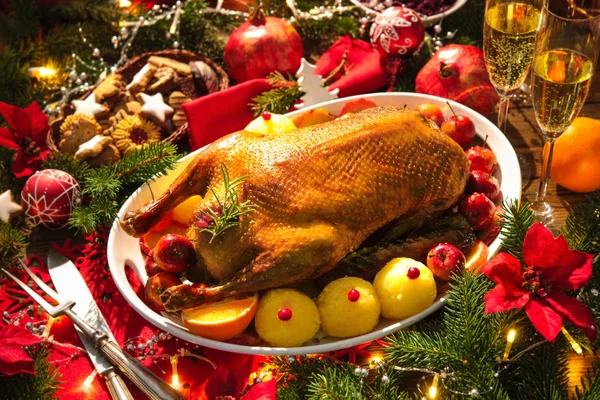
The Turkey Temperature Problem: Why One Reading Isn’t Enough
Turkey has a reputation for being one of the hardest things to cook well, and most of that comes down to a single problem: it’s not one uniform piece of meat. Anyone who’s ever pulled a turkey from the oven with a beautifully golden breast, only to find the thigh still pink near the bone, knows this frustration firsthand. Or the opposite problem, cooking until the thigh is fully done and ending up with breast meat that’s dry and chalky.
The stakes here are higher than with most other cuts. Undercooked turkey carries real food safety risk, especially with a bird this size, but overcooking to compensate is what ruins the meal for most people. Getting this right isn’t about luck or a longer cook time, it’s about knowing exactly where to check the temperature and what numbers to actually aim for.
The sections ahead walk through why turkey behaves so differently from other cuts, where to place the thermometer, what pull temperatures actually work, and how to avoid ending up with either an undercooked thigh or a dry, overcooked breast.
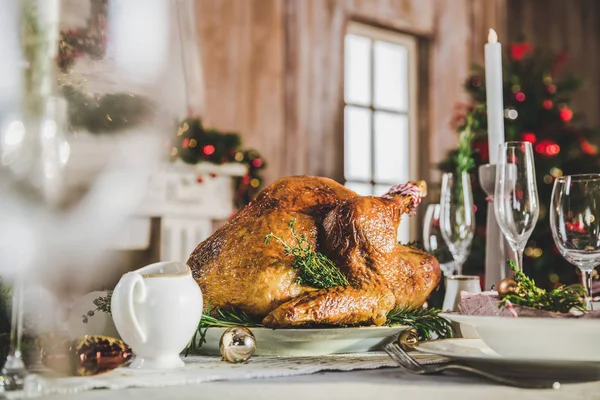
Why Turkey Is Different from Other Meats
Most cuts of meat are cooked as a single piece with a fairly consistent thickness and composition throughout, which is why one thermometer check usually tells the whole story. A whole turkey doesn’t work that way.
Breast and thigh cook at different rates
White meat and dark meat aren’t just different in flavor and texture, they’re structurally different. Breast meat is leaner and cooks faster, while thigh meat has more fat and connective tissue, which means it actually benefits from cooking to a higher temperature to fully break down and become tender. Because these two parts of the bird are cooking at different rates simultaneously, a single reading from just one spot doesn’t reflect what’s happening in the rest of the turkey.
Why one check gives a false sense of doneness
Checking only the breast and seeing 165°F might feel like confirmation that the whole bird is done, but the thigh, which needs to reach a higher temperature to be properly cooked through, could still be underdone at that same moment. This is exactly why turkey requires checking more than one location, which the next section covers in detail.
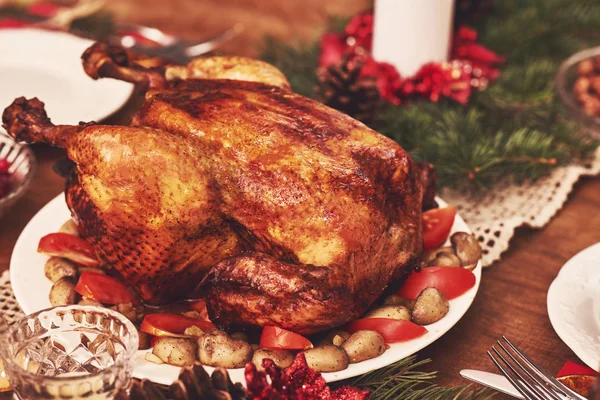
Where to Check Turkey Temperature
Getting an accurate picture of a turkey’s doneness means checking two separate spots, not just one.
The thickest part of the breast
Insert the thermometer probe into the thickest part of the breast, usually near the top where the meat is fullest, keeping it away from the bone underneath. Bone conducts heat differently than muscle tissue, so touching it gives a reading that doesn’t reflect the actual meat temperature nearby.
The thickest part of the thigh
The thigh should be checked separately, inserting the probe into the thickest part near, but not touching, the bone. This is often the last part of the bird to finish cooking, since dark meat is denser and takes longer to come up to temperature than the breast.
Why checking both matters
Because these two areas cook at different rates, relying on just one reading risks either serving undercooked thigh meat or overcooking the breast while waiting for the thigh to catch up. Checking both spots gives a complete, accurate picture of where the whole bird actually stands, which is essential for deciding when to pull it from the oven.
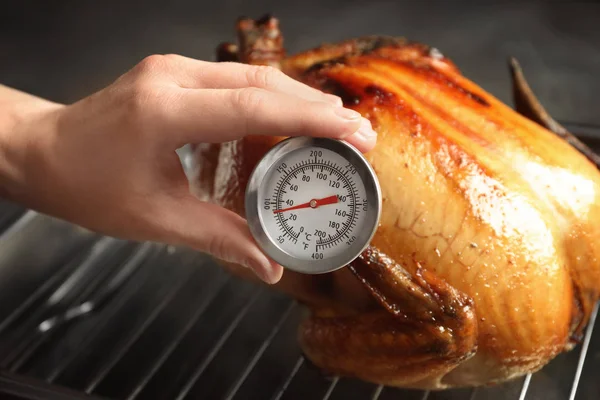
The Right Temperature Targets
Knowing where to check is only half the equation, knowing what numbers to actually aim for is what prevents both undercooking and unnecessary dryness.
The USDA safe minimum
The USDA safe minimum internal temperature for turkey is 165°F, measured in the thickest part of the meat. This is a food safety minimum, not necessarily the ideal target for every part of the bird.
Why 165°F everywhere often means overcooked breast
Since breast meat is leaner and dries out more easily than thigh meat, letting the whole bird sit in the oven until the thigh reaches 165°F often means the breast has already climbed well past that point, resulting in dry, overcooked white meat by the time the thigh finally catches up.
A better pull temperature strategy
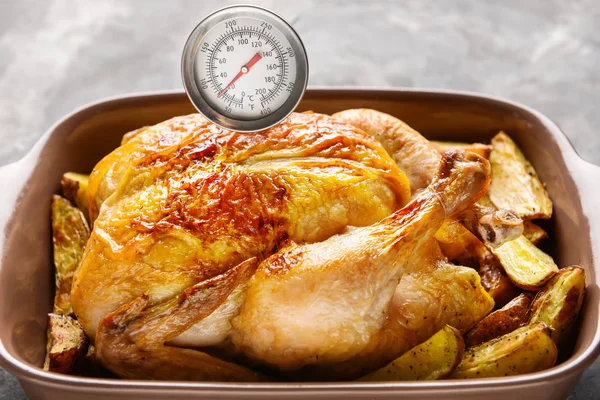
- Breast: pull around 160-162°F, allowing carryover heat to bring it up to a safe, juicy 165°F during rest
- Thigh: pull around 170-175°F, since dark meat benefits from the extra cooking time to fully tenderize, and this range still allows for a safe final temperature after carryover
This approach means both parts of the bird finish in their ideal range at roughly the same time, rather than forcing one to overcook while waiting for the other.
Accounting for Carryover Heat
A whole turkey is one of the biggest cuts most home cooks will ever prepare, and its size means carryover heat plays a bigger role here than with almost any other dish.
Why a whole turkey carries over more
Larger cuts store significantly more residual heat than smaller ones, since there’s more mass holding onto temperature that continues moving toward the center after the bird leaves the oven. A whole turkey can see a rise of 5 to 10°F, sometimes more depending on size, in the time it takes to rest before carving.
Adjusting pull temperatures accordingly
This is exactly why the pull temperatures in the previous section sit below the final safe target. Pulling the breast at 160-162°F accounts for the rise that happens naturally while the turkey rests, landing it at a safe, juicy 165°F without needing to leave it in the oven any longer than necessary.
Why this catches people off guard
Because turkey is often only cooked once or twice a year, it’s easy to forget that carryover applies here just as much as with a steak or roast, if not more, given its size. Building this expectation into the pull temperature from the start avoids the common experience of checking a rested turkey and finding it’s climbed further than expected.
Common Mistakes with Turkey Temperature
A few recurring habits are behind most turkey temperature problems, even among people who use a thermometer every time.
Only checking one spot
Checking just the breast, or just the thigh, and assuming the reading applies to the whole bird is one of the most common mistakes. As covered earlier, these two areas cook at different rates, so a single check doesn’t tell the full story.
Touching bone while checking
Letting the probe tip touch bone, whether in the breast or thigh, gives a reading that’s often higher than the surrounding meat actually is. This can create a false sense of doneness, leading to a bird that’s pulled before it’s actually ready in the meat itself.
Checking too early before the reading stabilizes
Pulling the number the moment it appears on the display, rather than waiting for it to settle, risks reading a temperature that’s still climbing. This is especially relevant with turkey, since the probe needs a moment to fully register the temperature of the dense muscle tissue around it.
Not resting the turkey long enough
Carving into a turkey immediately after pulling it from the oven skips both the carryover rise and the moisture redistribution that resting provides. Given the size of a whole bird, this mistake has an outsized effect compared to smaller cuts, which the next section covers in more detail.
How Long to Rest a Whole Turkey
Resting matters for every cut of meat, but a whole turkey needs considerably more time than smaller dishes due to its size.
Recommended rest time
A whole turkey should rest for 20 to 30 minutes before carving, tented loosely with foil to retain warmth without trapping enough steam to soften the skin. Larger birds, especially anything over 16 pounds, may benefit from resting closer to the 30-minute mark.
Why this matters more for turkey than smaller cuts
Because a whole turkey holds so much more residual heat than a steak or chicken breast, both the carryover temperature rise and the moisture redistribution process take longer to fully complete. Carving too early not only risks a temperature that hasn’t finished climbing, it also means more juices ending up on the cutting board instead of staying in the meat.
Practical timing tip
Since a 20-30 minute rest fits naturally into the timeline of finishing side dishes, setting the table, and getting everything else ready, this resting window rarely costs any real time on a busy cooking day, it typically overlaps with other tasks that need to happen anyway.
Using a Wireless or Leave-In Thermometer for Turkey
Given how much is riding on getting turkey temperature right, a wireless or leave-in thermometer removes a significant amount of the guesswork involved.
Avoiding repeated oven checks
Opening the oven door repeatedly to check temperature lets heat escape and can extend the overall cook time unpredictably. A leave-in probe thermometer solves this by tracking temperature continuously from outside the oven, without needing to open the door at all until it’s actually time to pull the bird.
Setting separate alerts for breast and thigh
Since breast and thigh need different pull temperatures, a multi-probe thermometer makes it possible to monitor both locations at once, with separate target alerts for each. This means getting notified the moment the breast hits its target, and separately when the thigh reaches its own, rather than manually checking both spots by hand throughout the cook.
A practical setup for holiday cooking
A model like the TempPro TP25, with multiple probes, works well here, one probe in the breast set to alert around 160-162°F, and a second in the thigh set to alert around 170-175°F. This turns what’s normally a stressful guessing game into something that runs quietly in the background while attention goes toward the rest of the meal.
Your Turkey Temperature Cheat Sheet for Next Time
Turkey doesn’t have to be the stressful, unpredictable dish it’s often made out to be. Checking both the breast and the thigh, rather than relying on a single reading, is the single biggest habit that prevents the classic problem of dry breast meat paired with an undercooked thigh.
Pulling the breast around 160-162°F and the thigh around 170-175°F, then letting carryover heat and a full 20-30 minute rest finish the job, results in a turkey that’s both safe and genuinely juicy throughout. And for anyone who wants to remove the guesswork entirely, a multi-probe thermometer with separate alerts for breast and thigh turns this whole process into something that runs quietly in the background, leaving more attention for everything else on the table.